
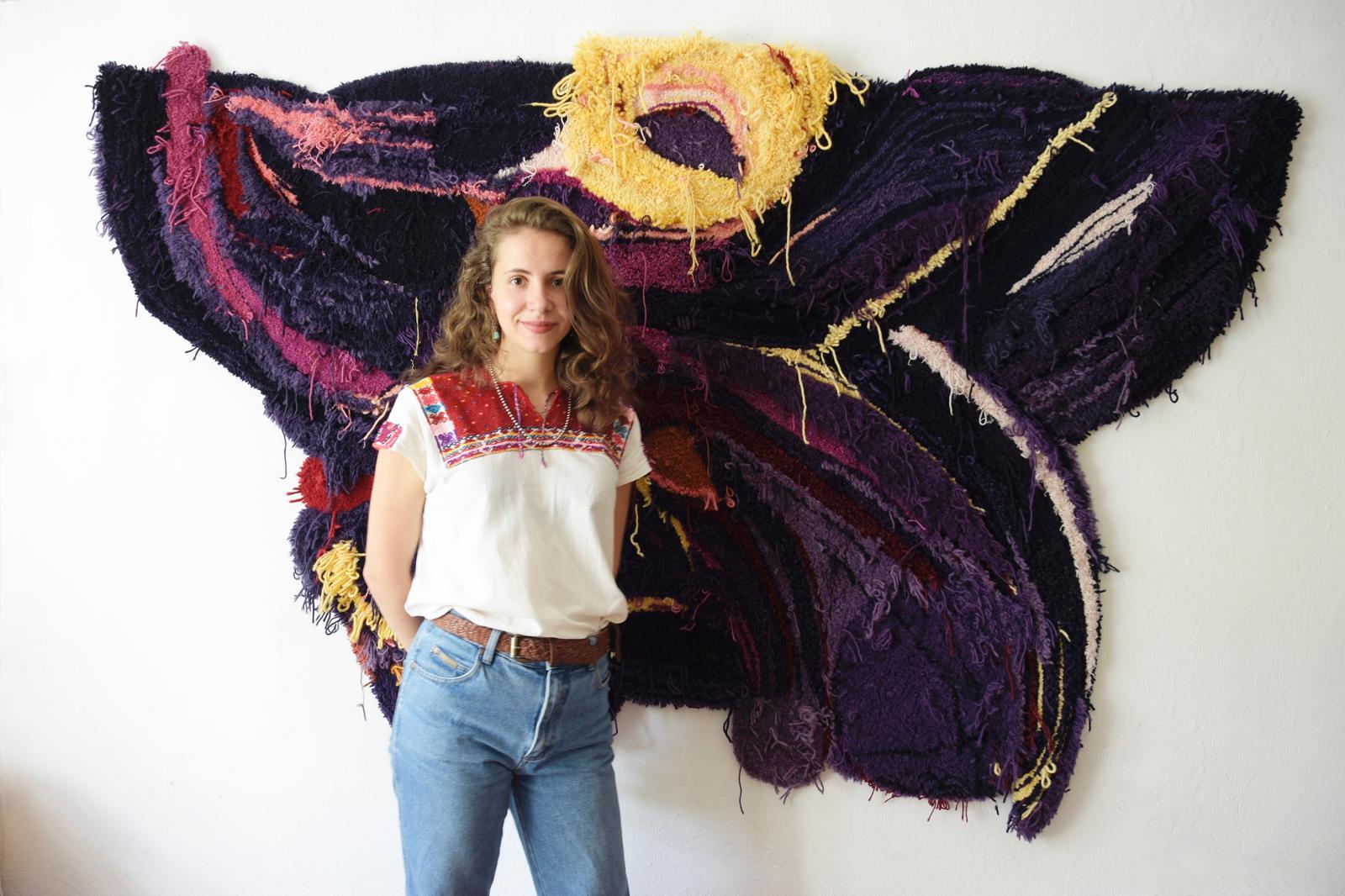
There is something unusual about living with a work by Dana László da Costa.
It doesn’t quite behave like a painting. It has depth, texture and movement. Wool and silk extend from the wall in forms that feel somewhere between botanical and abstract — almost as though something has grown into the apartment rather than been hung inside it.
That quality is exactly what drew us to Dana’s work.
At tenitt, we spend a lot of time thinking about what makes a temporary home actually feel like a home. Furniture matters. Light matters. The objects around you matter. But art has a different ability to change how a room feels — particularly when it isn’t treated as the final decorative layer.
With Dana, we wanted to explore what happens when art becomes part of the physical character of the space itself.
A practice shaped by nature
Dana László da Costa was born in Brazil and raised in the rural Neotropics, where much of her early life unfolded without electricity and in unusually close proximity to the natural world.
That experience still sits at the centre of her practice.
Rather than looking at nature primarily as something to depict, Dana approaches it as a collaborator — and, in many ways, as an artist in its own right.
Her materials reflect that relationship. Working primarily with wool and silk, she creates textile pieces through processes that are slow, tactile and deeply connected to place. Bark and plants can become natural dyes. Fibres are dyed, wound and tufted by hand. Colour and form emerge through making rather than being imposed onto the material from the beginning.
The process leaves traces in the finished work.
Somewhere between artwork and organism
Dana’s pieces are difficult to flatten into a category.
They aren’t conventional tapestries, nor are they simply textile versions of paintings. Their forms push outward into the room, creating shadows and changing depending on where you stand.
Some elements appear botanical. Others feel completely abstract.
From a distance, you might read one as a plant. Move closer and that certainty disappears. The work becomes fibre, colour, density and texture — something familiar without being immediately identifiable.
It can feel almost as though a species from another version of the natural world has found its way onto the wall.
That ambiguity is part of what makes the work so interesting inside a home.
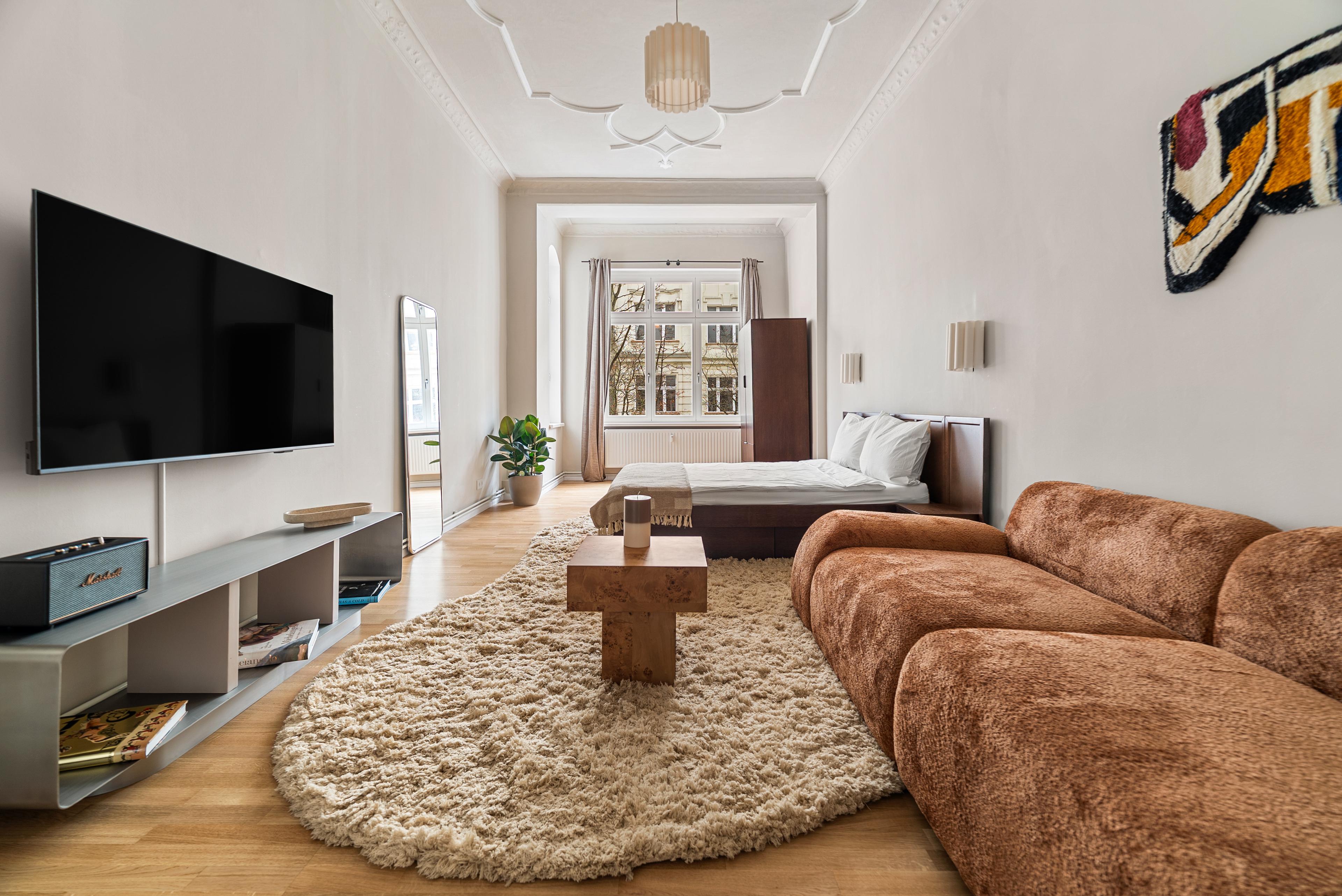
Art you live alongside
A home is different from a gallery.
You don’t encounter an artwork once, under controlled lighting, and move on. You wake up next to it. You pass it while making coffee. You see it in morning light, at night, from across the room and from a few centimetres away.
Over time, the relationship changes.
That’s particularly true with Dana’s work because it has such a physical presence. Natural fibres soften the architecture around them. Texture interrupts flat walls. Shadows become part of the piece. The work changes slightly throughout the day without actually moving.
For us, this is an interesting territory for tenitt.
See the work come to life From raw material to the finished piece in its new home, the process is as much a part of Dana’s work as the result. Watch the full film and step inside the collaboration.